
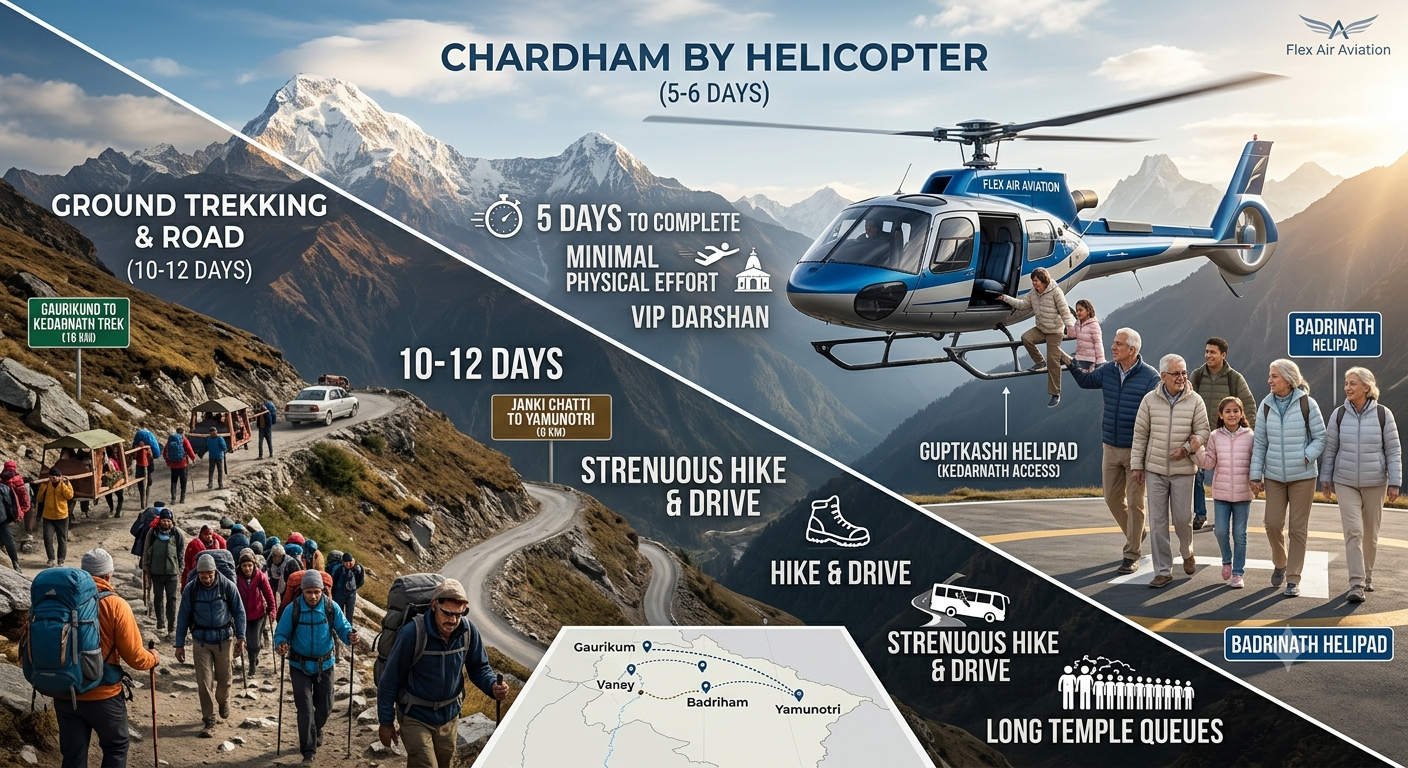
Planning the Chardham Yatra is a sacred milestone, but choosing how to undertake the journey to Yamunotri, Gangotri, Kedarnath, and Badrinath is a critical decision. High altitudes, rugged terrain, and unpredictable Himalayan weather mean that your choice between flying and trekking directly impacts your comfort, time, and overall experience.
Whether you are looking to complete the pilgrimage in days or weeks, here is an honest breakdown of Chardham Yatra by Helicopter compared to Ground Trekking & Road Travel.
At a Glance: Helicopter vs. Ground Trekking
| Feature | Chardham by Helicopter | Ground Trekking & Road |
| Total Duration | 5 to 6 Days | 10 to 12 Days |
| Physical Effort | Minimal (VIP darshan, short transfers) | High (Includes 16+ km steep treks) |
| Badrinath & Kedarnath Travel | Direct flight to helipads | Hours of winding mountain roads + trek |
| Yamunotri Access | Flight to Kharsali + short trek/palki | Drive to Janki Chatti + 6 km steep trek |
| Ideal For | Senior citizens, busy professionals, families | Trekkers, budget travelers, youth groups |
1. Time Commitment & Efficiency
The most significant difference between flying and traveling by road is time.
- By Helicopter: A complete Chardham Yatra starting from Dehradun (Sahastradhara Helipad) takes just 5 days and 4 nights. You spend less time navigating mountain traffic or waiting in multi-hour queues.
- By Ground: A typical road and trekking itinerary requires 10 to 12 days. Heavy traffic on single-lane mountain passes, frequent landslides, and long trekking hours consume the majority of your journey.
2. Physical Toll & Terrain Navigation
Yamunotri & Kedarnath Challenges
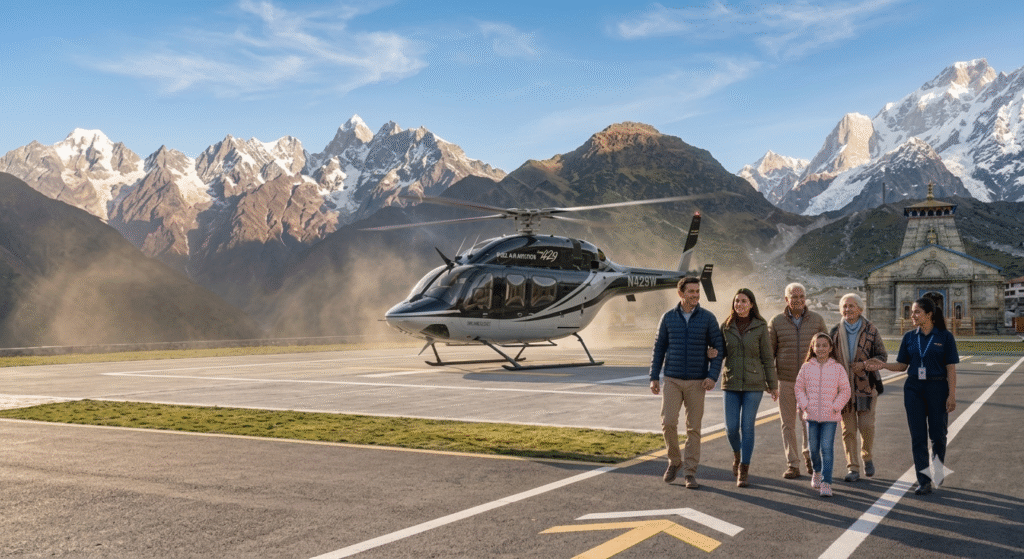
- Kedarnath: Ground travelers face a strenuous 16-kilometer trek each way from Gaurikund, ascending from 6,500 ft to 11,750 ft. By helicopter, shuttles operate directly from Phata, Sersi, or Guptkashi to the Kedarnath helipad, located just 500 meters from the temple entrance.
- Yamunotri: Flying drops you at the Kharsali helipad, leaving only a brief trek or pony ride to the shrine. Ground travelers must endure a grueling drive followed by a steep 6 km climb from Janki Chatti.
3. Altitude Sickness & Health Considerations
High Altitude Pulmonary Edema (HAPE) and acute mountain sickness (AMS) are common risks in the Garhwal Himalayas.
- Helicopter Travel: Decreases fatigue significantly. Flying allows travelers to spend less time exposed to extreme cold and harsh mountain weather, making it the safest option for elderly pilgrims or those with preexisting respiratory/cardiac conditions.
- Ground Trekking: Gradual ascent allows for natural acclimatization, but extended physical exertion at lower oxygen levels significantly increases physical exhaustion and cardiac strain.
Key Booking Checklist for Flying
- Weight Constraints: Aviation safety mandates strict passenger and luggage limits (typically 5 kg per passenger in soft duffel bags).
- Medical Clearances: Ensure senior travelers complete basic health checks prior to flying into altitudes over 11,000 feet.
- Weather Buffers: Always keep a 1-day buffer in your itinerary for potential weather delays in the mountains.