
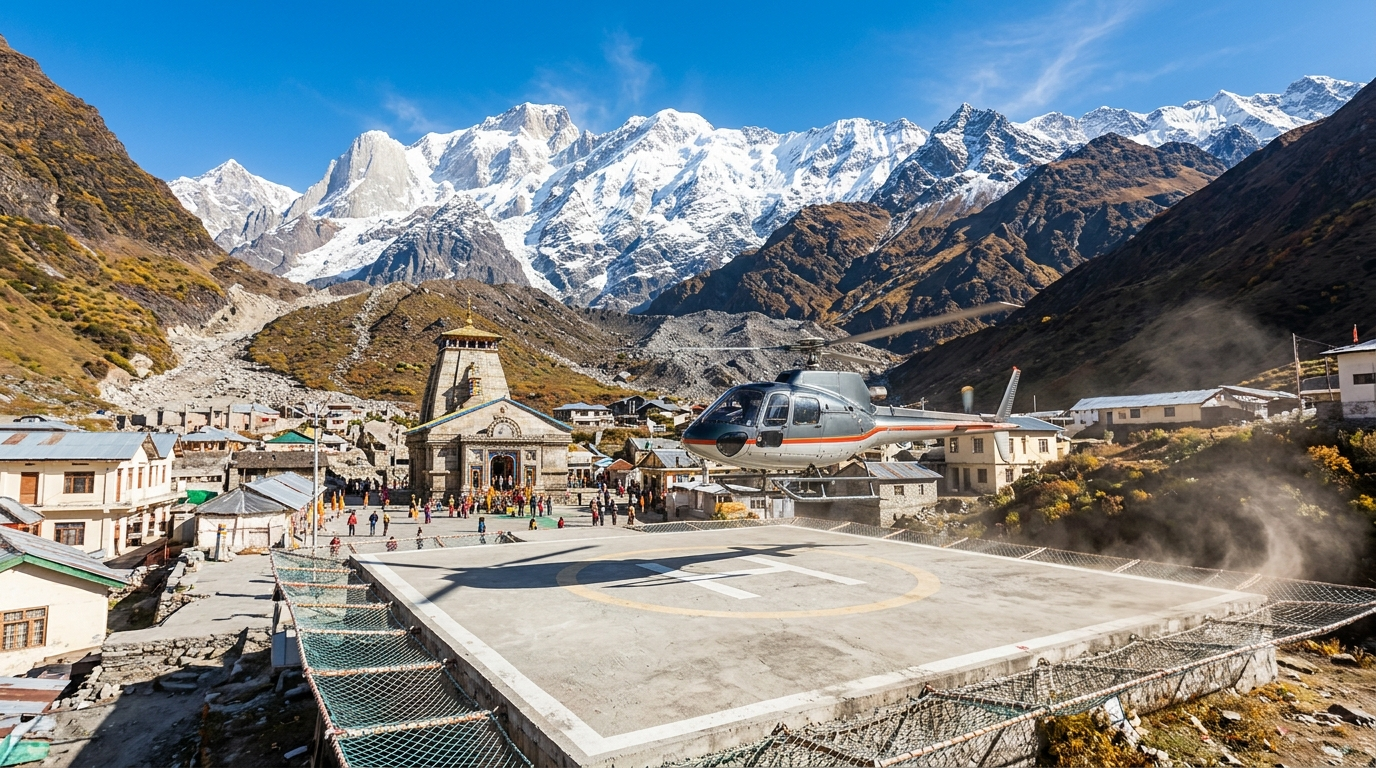
As the crisp autumn air takes over the Garhwal Himalayas, the pilgrimage season enters its most magnificent yet time-sensitive phase. Following the monsoon retreat, late September, October, and early November present crystal-clear blue skies, majestic snow-clad Himalayan views, and significantly smaller crowds compared to the chaotic summer rush.
However, because high-altitude shrines close their doors for the winter season around Diwali and Bhai Dooj, planning a late-season Yatra requires careful timing, weather readiness, and precise flight scheduling.
This comprehensive guide covers everything you need to know about the 2026 closing window, temperature shifts, and why chartering a helicopter with Flex Air Aviation is the safest and most comfortable way to complete your Yatra before the temples close.
1. Expected Temple Closing Dates for Chardham 2026
Every year, the official closing dates (Kapat Bandh) of the four holy shrines are determined based on the Hindu Panchang during Vijayadashami and Diwali:
| Shrine | Elevation | Expected Closing Occasion | Approx. Closing Window |
| Shri Gangotri Dham | ~3,100 m | Govardhan Puja (Day after Diwali) | Early November 2026 |
| Shri Yamunotri Dham | ~3,291 m | Bhai Dooj | Early November 2026 |
| Shri Kedarnath Dham | ~3,583 m | Bhai Dooj (Early Morning) | Early November 2026 |
| Shri Badrinath Dham | ~3,133 m | Kartik Purnima / Mid-November | Mid-November 2026 |
Note: Once the shrine doors close, the deity idols are moved to their respective winter seats (Ukimath for Kedarnath, Joshimath for Badrinath, Mukhba for Gangotri, and Kharsali for Yamunotri).
2. Why October & November are the “Gold Standard” for Helicopter Flying
While May and June see the highest volume of pilgrims, late autumn offers far superior flying conditions across the Garhwal valleys:
- Unmatched Aerial Visibility: Monsoon humidity fully clears out by October. The atmospheric stability allows helicopters to fly smoothly through mountain passes with panoramic views of snow-capped peaks like Chaukhamba, Neelkanth, and Nanda Devi.
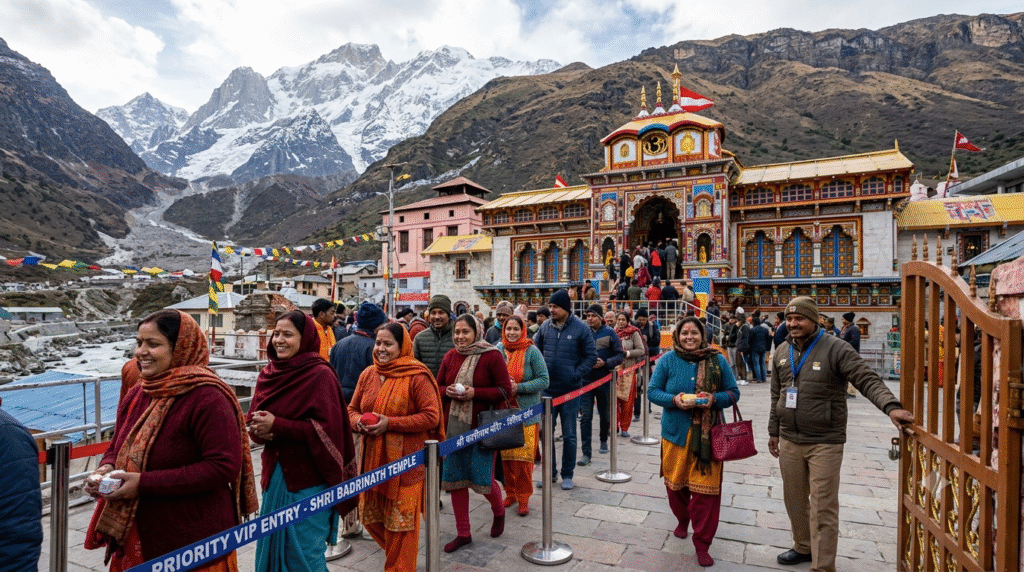
- Shorter Lines & Serene Darshan: Summer queues at Kedarnath and Badrinath can extend up to 6 hours. In late October, passenger footfall drops dramatically, allowing pilgrims to engage in peaceful prayers and Aarti without rushing.
- Zero Monsoon Delays: Rain and fog disruptions drop significantly compared to July-August, making flight schedules highly predictable.
3. High-Altitude Autumn Temperatures & Packing Essentials
Late-season flying brings rewarding views, but temperatures drop rapidly, especially during early morning heli-transfers and overnight stays at Kedarnath or Badrinath.
Regional Temperature Overview:
- Dehradun Base (~640 m): Daytime 24°C to 28°C | Night 15°C to 18°C (Pleasant)
- Badrinath Dham (~3,133 m): Daytime 6°C to 12°C | Night -2°C to 2°C (Chilly to Freezing)
- Kedarnath Dham (~3,583 m): Daytime 2°C to 8°C | Night -5°C to 0°C (Sub-zero conditions)
Essential Packing List for Autumn Heli-Yatra:
- Thermal Innerwear: 2–3 pairs of high-quality thermal tops and bottoms.
- Outer Layer: Windproof down jacket or heavy fleece coat.
- Footwear: Sturdy, insulated trekking shoes with woolen socks.
- Accessories: Woolen beanie/caps, insulated gloves, and neck gaiters.
- Luggage Limit: Remember that helicopter baggage limits remain strictly capped at 2 kg to 5 kg per passenger in soft duffel bags provided by Flex Air Aviation (main suit-cases stay safely stored at your Dehradun base hotel).
4. How Flex Air Aviation Ensures a Seamless Late-Season Yatra
Navigating cold temperatures and closing schedules requires reliable ground infrastructure and aviation expertise. Flex Air Aviation provides:
- VIP Fast-Track Passes: Priority temple entry so senior citizens and families do not have to wait in cold morning queues.
- Heated Vehicle Transfers: Comfortable ground vehicles for all helipad-to-hotel and temple transfers.
- Dedicated Shuttle Management: Seamless priority shuttle transfers between Sersi/Phata helibases and Kedarnath top helipad.
- Experienced Mountain Pilots: Highly trained pilots operating under strict DGCA aviation protocols for high-altitude mountain terrain.