
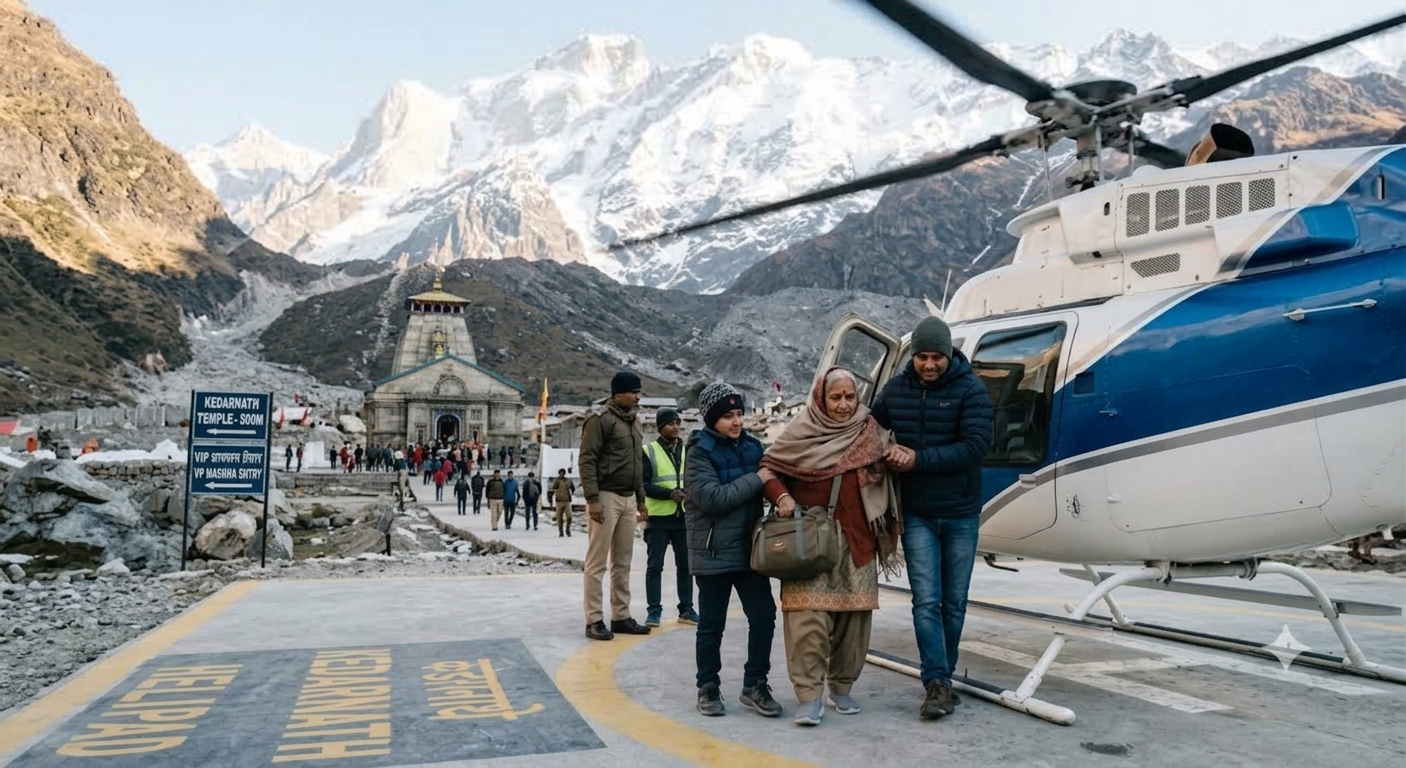
Embarking on the sacred Chardham Yatra by helicopter is a once-in-a-lifetime spiritual milestone. Flying over the snow-capped Himalayan peaks of Garhwal drastically simplifies a journey that otherwise requires weeks of rugged mountain driving.
However, operating aviation services at extreme altitudes (above 10,000 to 11,500 feet) involves strict safety physics. Weather conditions, air density, and aircraft balance play vital roles. Understanding and adhering to passenger weight, luggage limits, and health regulations ensures a smooth, safe, and comfortable pilgrimage for everyone onboard.
1. Weight & Luggage Regulations: Why Every Kilo Matters
Helicopters used in mountain operations—such as Airbus H125 (Ecureuil) or Bell 407 models—are high-performance machines engineered for high-altitude landings. However, thinner mountain air reduces lift capacity, making weight control the single most critical safety factor.
Strictly Enforced Baggage Rules
- Individual Luggage Allowance: Maximum 5 kg per passenger.
- Permitted Bag Type: Duffle bags or soft-sided luggage only.
- Prohibited Items: Hard-shell suitcases, trolley bags with wheels, and oversized backpacks are strictly forbidden on board. Hard luggage cannot conform to cargo hold spaces and alters center-of-gravity calculations.
Passenger Weight Limits & Surcharges
- Standard Allowance: Charter packages typically calculate a combined total passenger weight limit (usually 430 kg to 450 kg total for 6 passengers).
- Individual Threshold: Passengers weighing over 75 kg to 80 kg may incur excess weight charges depending on the collective load of the flight.
- Co-Seat Requirements: If an individual’s weight exceeds 85–90 kg, aviation operators may require booking an additional seat to balance the aircraft’s payload limits safely.
2. Altitude & Health Guidelines for Pilgrims
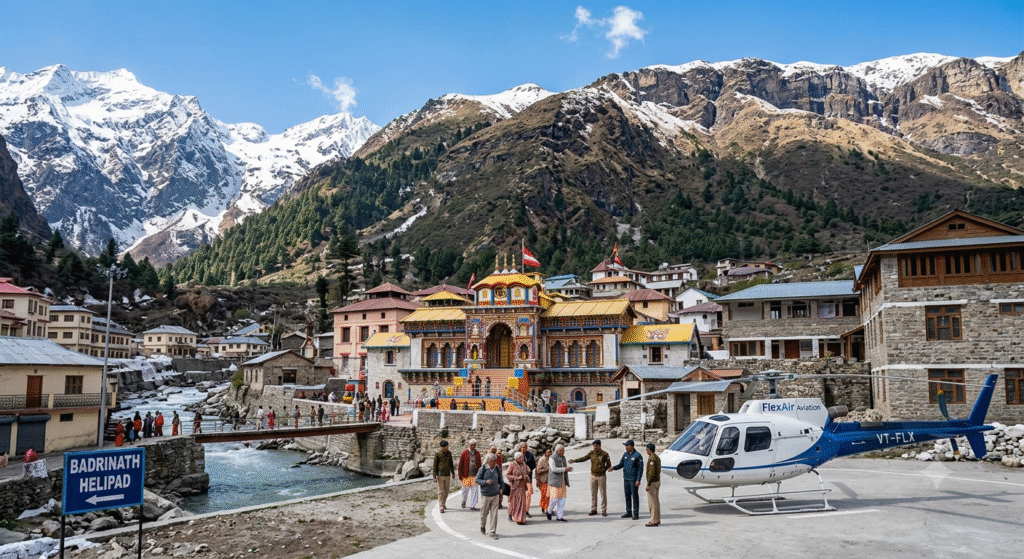
The Four Shrines are situated at severe high-altitude elevations:
| Shrine | Elevation | Medical Considerations |
| Yamunotri | 3,293 m (10,800 ft) | Cold temperatures, steep arrival path |
| Gangotri | 3,100 m (10,200 ft) | Moderately thin air, cold winds |
| Kedarnath | 3,583 m (11,755 ft) | High risk of Acute Mountain Sickness (AMS) |
| Badrinath | 3,300 m (10,830 ft) | Cold temperatures, sudden weather shifts |
Medical Checkups & Pre-Travel Prep
- Mandatory Registration: Complete your official Uttarakhand Tourism registration well in advance.
- Medical Fitness Clearance: Passengers over 50 or those with history of hypertension, cardiovascular disease, or asthma must consult a physician before travel.
- High-Altitude Acclimatization: Rest adequately upon arriving in Dehradun before taking off into higher altitude helipads.
- Essential Medicines: Keep a personal medical kit containing prescribed medicines, Diamox (for altitude sickness, only upon doctor’s advice), oxygen cans, pain relievers, and hydration salts in your hand carry.
3. Recommended Packing List for Helicopter Pilgrims
To stay within the 5 kg soft duffle bag limit, focus on layering and compact essentials rather than heavy individual garments:
- Clothing:
- Thermal innerwear (2 pairs)
- Lightweight down jacket or windproof fleece
- Comfortable trek pants or warm woolen trousers
- Woolen socks, gloves, and a warm beanie cap
- Footwear: Comfortable walking shoes or sneakers with anti-slip rubber soles.
- Personal Care: High-SPF sunscreen, lip balm, moisturizing lotion, wet wipes, and dark sunglasses with UV protection.
- Documents & Currency: Original Aadhar/ID card, printed registration passes, medical documents, and sufficient physical cash (ATMs at high altitudes can often be offline).