
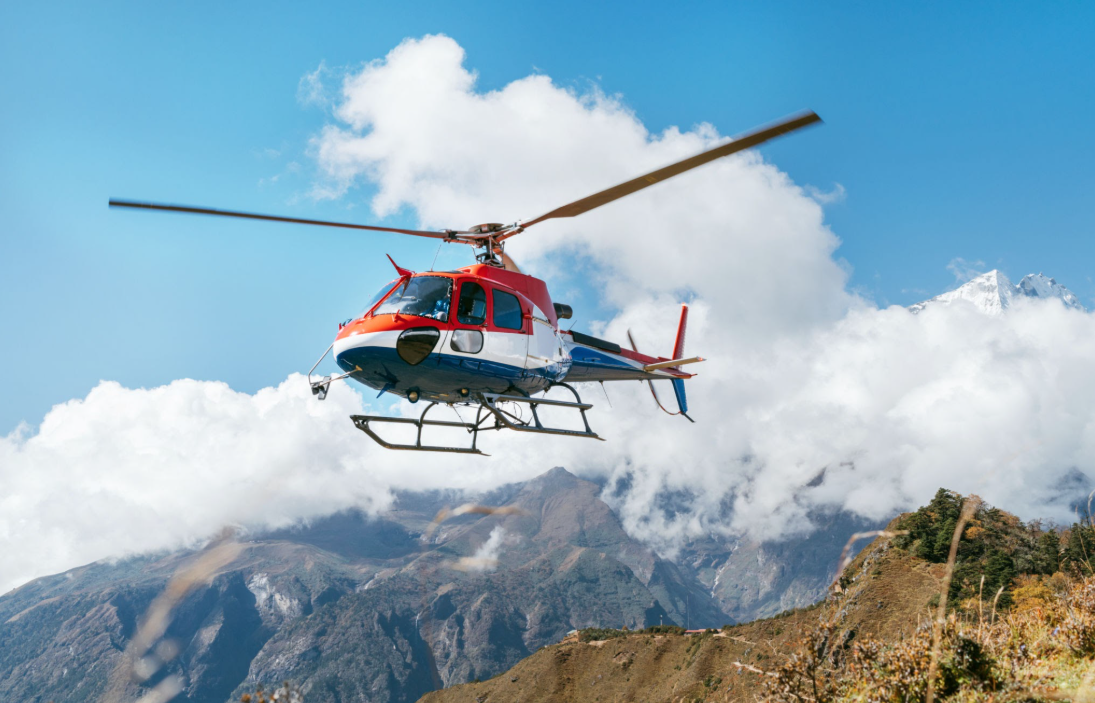
In critical medical emergencies, every minute between symptom onset and definitive hospital care shapes patient survival and recovery. Across India—whether along high-altitude Himalayan pilgrimage routes, remote industrial corridors, or congested highway stretches—road ambulances often face multi-hour delays caused by winding mountain terrain, landslides, or urban traffic bottlenecks.
A helicopter medical rescue bridges that critical gap. By lifting off vertically from local helipads, district grounds, or approved clearing zones and flying directly toward tertiary care hubs, rotary-wing medical evacuation turns six-to-ten-hour road transfers into 30-to-60-minute air missions. At FlexAir Aviation, we coordinate rapid Helicopter for Medical Rescue missions across key operational hubs including Dehradun, Delhi NCR, Mumbai, and Pune, supporting families, hospitals, corporate field teams, and Himalayan pilgrims when urgent evacuation is required.
When Is Helicopter Medical Evacuation Needed?
Helicopter air evacuation is specifically built for short-to-medium-range emergencies (typically up to 300–500 km) where ground transport is too slow, physically unsafe for the patient, or blocked by terrain.
- High-Altitude & Pilgrimage Emergencies: During the Chardham Yatra (Kedarnath, Badrinath, Yamunotri, and Gangotri) and treks across Uttarakhand and Himachal Pradesh, sudden altitude sickness (HAPE/HACE), cardiac events, or trauma require immediate descent to lower elevations and advanced hospitals in Dehradun, Rishikesh, or Delhi NCR.
- Golden Hour Trauma & Highway Accidents: Victims of severe road accidents, industrial injuries, or burns located far from Level-1 trauma centers benefit directly from rapid air extraction within the critical “Golden Hour.”
- Cardiac, Stroke & Critical ICU Transfers: Patients suffering acute myocardial infarction, stroke, or respiratory failure who need urgent interventional cardiology or neurosurgery can be transferred swiftly from Tier-2/Tier-3 nursing homes to specialized metro hospitals.
- Remote Project & Disaster Extraction: Engineering teams working at hydropower dams, tunnels, mining sites, or flood-affected districts rely on rotary-wing evacuation when roads are severed or impassable.
Helicopter Air Ambulance vs. Fixed-Wing Air Ambulance
Choosing the right aircraft depends on distance, runway availability, and clinical urgency:
| Factor | Helicopter Medical Rescue | Fixed-Wing Air Ambulance |
| Takeoff & Landing | Vertical takeoff/landing at helipads, hospital pads, or approved open grounds | Requires a licensed airport runway |
| Ideal Distance | Short-to-medium range (50 km to ~450 km) | Long-distance interstate or international transfers (500+ km) |
| Remote & Hill Access | Exceptional—reaches mountain valleys, pilgrimage shrines, and remote sites | Limited to cities with operational airports |
| Hybrid Transfer Option | Often flies the first leg from a remote site to an airport for fixed-wing handover | Handles the long-haul leg to metro medical hubs |
In many Himalayan or rural rescues, both work together: a helicopter evacuates the patient from a mountain helipad to Dehradun (Jolly Grant Airport or Sahastradhara Helidrome), where either a waiting ground ICU ambulance takes them to a local hospital or a fixed-wing air ambulance transfers them onward to Delhi, Mumbai, or Chennai.
Inside a Medical Evacuation Helicopter: Equipment & Crew
A medical rescue mission is far more than a standard passenger flight—it is a coordinated clinical transfer governed by strict aviation and healthcare protocols.
- Aviation-Certified Medical Equipment: Depending on patient acuity, the cabin is configured with a crash-tested stretcher mount, aviation-approved gaseous oxygen cylinders (standard hospital ward cylinders are strictly prohibited on aircraft under dangerous goods norms), portable transport ventilators, multi-parameter cardiac monitors, defibrillators, suction units, and syringe infusion pumps.
- Specialized Aeromedical Crew: Critically ill patients are accompanied by an emergency physician or intensivist (with ACLS certification) alongside a critical-care flight nurse or paramedic trained in aviation physiology and in-flight airway management.
- Bed-to-Bed Ground Integration: Because most city hospitals lack rooftop helipads, seamless evacuation pairs the helicopter sortie with pre-positioned Advanced Life Support (ALS) ground ambulances at both departure and arrival helipads so medical supervision never pauses.
Step-by-Step: How an Emergency Helicopter Rescue Works
When a family or hospital initiates a medical evacuation request with FlexAir Aviation, our operations desk executes a streamlined sequence to minimize ground turnaround time:
1. Clinical Assessment & Fit-to-Fly Clearance
The treating doctor shares the patient’s vitals, diagnosis, oxygen dependency, and equipment needs. A “Fit-to-Fly” medical clearance confirms the patient is stable enough for flight altitude and cabin vibration, and identifies the admitting physician and ICU bed at the receiving hospital.
2. Aircraft Allocation & Route Weather Check
Operations selects an appropriate single-engine or twin-engine helicopter positioned closest to the patient (such as our bases in Dehradun, Delhi, Mumbai, or Pune) and evaluates real-time en-route weather, wind speeds, and visibility.
3. Priority ATC & Landing Clearances
Flight plans are filed under MEDEVAC priority with Air Traffic Control (ATC) to secure direct routing. If landing at a temporary ground rather than a licensed helidrome, our team coordinates with local district administration, police, and fire services for rapid landing-zone clearance.
4. Ground Ambulance Sync & Tarmac Transfer
Ground ambulances are dispatched to meet the helicopter at the landing pad, ensuring rapid stretcher loading and uninterrupted oxygen and cardiac monitoring from takeoff to hospital admission.
Aviation Rules & Safety Reality in Medical Evacuations
Even in life-threatening emergencies, civil aviation safety boundaries remain non-negotiable under Directorate General of Civil Aviation (DGCA) guidelines:
- Daylight & Weather Minima: Most regional and mountain helipads operate under Visual Flight Rules (VFR) during daylight hours. Dense Himalayan fog, heavy monsoon rain, or severe crosswinds can delay takeoff until visibility clears—pilots never compromise flight safety, as an unsafe flight endangers both patient and crew.
- Accurate Patient & Companion Weights: Helicopters operate within strict maximum takeoff weight and center-of-gravity limits, especially at high elevations where thin air reduces rotor lift. Families must provide accurate weights for the patient, medical gear, and any accompanying family member (typically limited to one attendant on critical stretcher missions).
What Determines the Cost of a Helicopter Medical Rescue?
Emergency helicopter evacuation costs vary widely depending on mission complexity, typically ranging from ₹2 lakh to ₹10+ lakh based on four key variables:
- Total Flying Hours & Ferry Distance: Billing is calculated on engine/flying hours from the nearest operational helicopter base to the pickup point, onward to the destination helipad, and back to base.
- Aircraft Type: High-altitude mountain rescues or long-range transfers often require higher-powered single-engine or twin-engine helicopters with greater payload capacity.
- Medical Setup & ICU Crew: Basic stretcher transport with oxygen and a paramedic costs less than full ICU configuration with a portable ventilator, cardiac monitor, and critical-care doctor.
- Airport, Helipad & Ground Ambulance Charges: Heliport landing fees, night-watch extensions (if applicable), and ALS ground ambulances at both ends are itemized transparently in the mission quote.
Frequently Asked Questions (FAQs)
How quickly can a medical rescue helicopter take off?
For daytime missions from active hubs like Dehradun, Delhi, Mumbai, or Pune—once medical reports, Fit-to-Fly clearance, and landing permissions are confirmed—dispatch can often be mobilized within 2 to 4 hours, subject to weather and ATC clearance.
Can a family member travel with the patient inside the helicopter?
On non-stretcher or basic oxygen transfers, one family attendant can usually accompany the patient. On full ICU stretcher setups, cabin space and payload weight are prioritized for life-support equipment and medical staff, so attendant seating depends on the specific helicopter model.
Does health or travel insurance cover helicopter medical evacuation in India?
Many comprehensive travel insurance policies (especially those with adventure or high-altitude pilgrimage riders) and select corporate or critical-illness health plans reimburse emergency air ambulance expenses when certified as medically necessary by a treating doctor. Always retain the official aviation invoice, flight log, and Fit-to-Fly certificate for insurance claims.
Can helicopters evacuate patients from Kedarnath or Badrinath during emergencies?
Yes. During the open pilgrimage season, helicopters routinely evacuate pilgrims experiencing severe altitude sickness, cardiac distress, or injuries from high-altitude helipads down to Dehradun or Rishikesh for immediate hospital care, subject to mountain weather windows.
Contact FlexAir Aviation for Urgent Medical Evacuation Support
When a medical emergency strikes in the mountains, on the highway, or across regions with limited hospital access, rapid coordination saves lives. With strategic bases near Sahastradhara Road in Dehradun and Greater Noida (Delhi NCR) alongside operations in Mumbai and Pune, FlexAir Aviation delivers responsive, safety-first helicopter medical rescue coordination.
For urgent air evacuation inquiries, feasibility checks, or charter assistance, contact FlexAir Aviation immediately or call our operations team at +91 8004008835 / 9389213255 (or email info@flexairaviation.com).